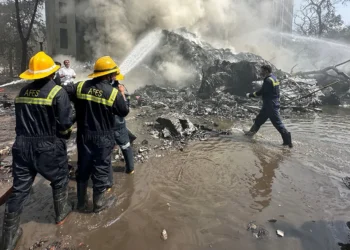











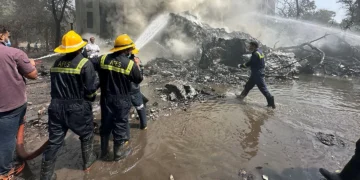




















On June 1, 2025, a daring drone strike was launched deep into Russia, destroying over 40 bombers, including Tu-95s. This operation, carried out ahead of pivotal peace talks in Istanbul, showcased evolving asymmetric tactics and highlighted the vulnerability of Russia’s strategic assets.


The attack, which spanned three time zones and reached as far as Siberia, the Far East, and Murmansk, was a significant escalation in the ongoing conflict. Russia’s bomber force was significantly impacted, changing from the world’s 2nd biggest to the 3rd largest in just a day.
Key Takeaways
- The drone strike destroyed over 40 Russian bombers.
- The operation was carried out ahead of peace talks in Istanbul.
- Russia’s strategic assets were shown to be vulnerable.
- The attack spanned three time zones, reaching Siberia and Murmansk.
- Russia’s bomber force ranking changed significantly overnight.
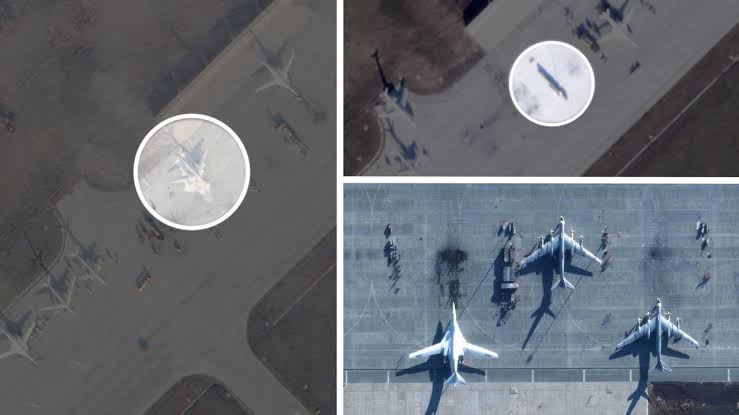
The Unprecedented Scale of Ukraine’s Drone Attack on Russian Bombers
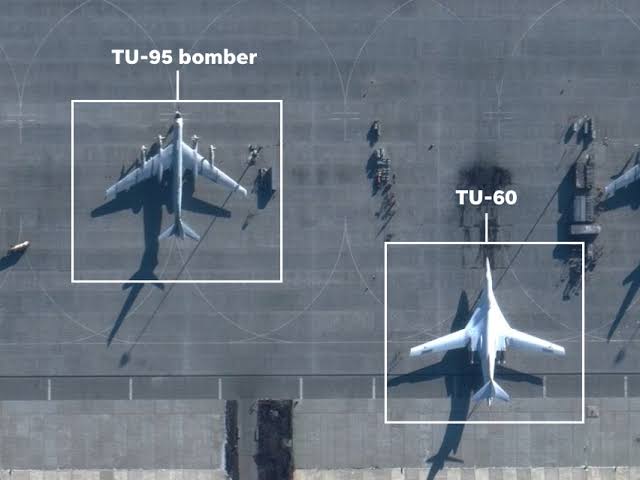
On June 1, 2025, Ukraine launched an unprecedented drone operation against Russian bomber fleets, showcasing its evolving asymmetric tactics. The operation involved 117 drones operated from within Russia, targeting and destroying over 40 bombers, including Tu-95, Tu-22M3, and A-50 radar planes.
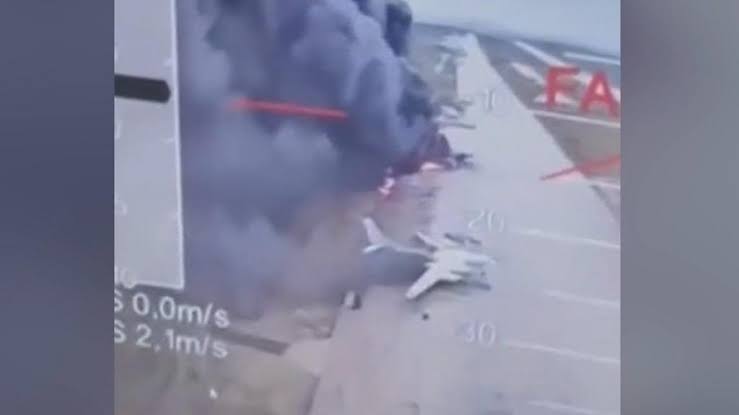
Overview of the June 1, 2025 Operation
The operation was notable not only for its scale but also for its strategic execution. 117 drones were deployed, demonstrating Ukraine’s capability to launch complex, coordinated attacks deep into Russian territory. The targets included Tu-95 “Bear” strategic bombers, Tu-22M3 “Backfire” medium bombers, and A-50 airborne early warning aircraft, significantly impacting Russia’s military capabilities.
Strategic Timing Ahead of Istanbul Peace Talks
The timing of the drone attack, just ahead of the Istanbul peace talks, was strategic. It signaled Ukraine’s strengthened position and potentially impacted the negotiations. The attack demonstrated Ukraine’s military prowess and its ability to inflict significant damage on Russian strategic assets. This development is likely to influence the dynamics of the peace talks, with Ukraine potentially holding a stronger bargaining position.
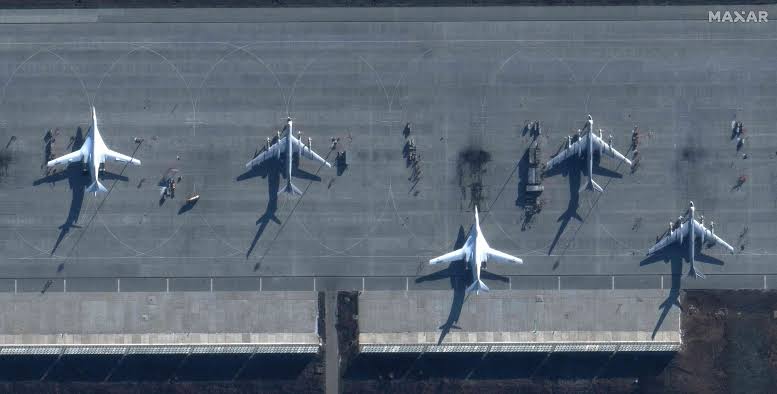
| Aircraft Type | Number Damaged | Significance |
|---|---|---|
| Tu-95 “Bear” | 15+ | Russia’s nuclear delivery platform |
| Tu-22M3 “Backfire” | 10+ | Conventional strike capability |
| A-50 Airborne Early Warning | 5+ | Russia’s “eyes in the sky” |
Inside the Operation: How117 Drones Penetrated Deep Into Russian Territory
In a bold move, Ukraine’s Security Service, led by Vasyl Maliuk, orchestrated a complex drone operation deep into Russian territory. This operation, known as the “Spiderweb,” showcased Ukraine’s growing capabilities in remote drone warfare.
Operational Logistics and Deployment Strategy
The success of the operation hinged on meticulous planning and execution. The deployment strategy involved launching 117 drones from various locations, ensuring a wide dispersal across Russian territory. The drones were equipped with advanced navigation systems, allowing them to evade Russian air defenses.
The operational logistics were complex, involving coordination between different branches of Ukraine’s military and intelligence services. The drones were directed to target key airbases, including those in Siberia and the Far East, highlighting the extensive reach of Ukraine’s military capabilities.

Three Time Zones: From Western Russia to Siberia and the Far East
The drones traversed three time zones, striking at the heart of Russia’s military infrastructure. The operation demonstrated Ukraine’s ability to conduct coordinated attacks across vast distances, challenging Russia’s air defense systems.
| Region | Target | Outcome |
|---|---|---|
| Western Russia | Airbase | Significant damage |
| Siberia | Strategic Bomber Fleet | Multiple aircraft destroyed |
| Far East | Air Defense Systems | Disabled |
The operation’s success has significant implications for the conflict, showcasing Ukraine’s advanced capabilities in drone warfare and its ability to target Russian strategic assets deep within its territory.
Targets Acquired: The Strategic Bombers in Russia’s Arsenal
Ukraine’s bold operation struck at the heart of Russia’s nuclear delivery platforms and conventional strike capabilities. The drone attack targeted Russia’s strategic bombers, including the Tu-95 “Bear” and the Tu-22M3 “Backfire.” These aircraft are critical components of Russia’s military arsenal.
Tu-95 “Bear” Strategic Bombers: Russia’s Nuclear Delivery Platform
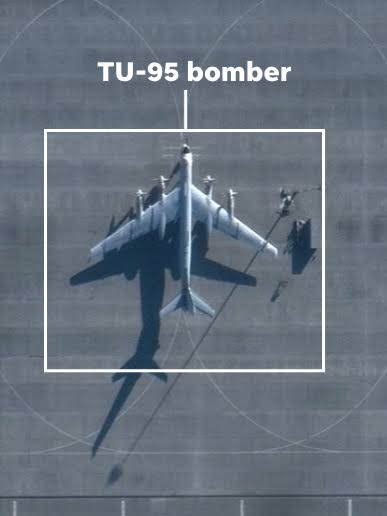
The Tu-95 “Bear” is a long-range strategic bomber capable of delivering nuclear weapons. It has been a cornerstone of Russia’s nuclear deterrent since the Cold War era. The loss of several Tu-95 bombers in the drone attack significantly impacts Russia’s nuclear delivery capabilities. According to reports, some of these bombers were destroyed or severely damaged, potentially reducing Russia’s nuclear strike readiness.
Tu-22M3 “Backfire” Medium Bombers: Conventional Strike Capability
The Tu-22M3 “Backfire” is a medium bomber with conventional strike capability. It has been used in various conflicts, including in Ukraine and Syria. The Tu-22M3 is valued for its speed and maneuverability, making it a versatile asset for Russia’s air force. The destruction of multiple Tu-22M3 bombers during the drone attack weakens Russia’s ability to project conventional air power.
A-50 Airborne Early Warning Aircraft: Russia’s “Eyes in the Sky”
In addition to bombers, the drone strike also targeted A-50 airborne early warning aircraft, often referred to as Russia’s “eyes in the sky.” These aircraft provide critical surveillance and command and control capabilities, enabling Russia to detect and respond to aerial threats. Damaging these assets compromises Russia’s ability to monitor its airspace effectively.
The combined loss of these aircraft—Tu-95, Tu-22M3, and A-50—represents a significant setback for Russia’s military capabilities. It is reported that over 40 bombers were destroyed or damaged, which could be a substantial portion of Russia’s operational bomber fleet. According to War Is Boring, Russia may have lost a third of its roughly 120 Tupolev bombers in just a few hours, underscoring the scale of the attack.
Airbases Under Attack: Mapping the Strike Locations
In a bold move, Ukraine launched a drone attack on several key Russian airbases, shaking the foundations of Russia’s military might. The operation targeted critical airbases across Russia, demonstrating Ukraine’s capability to strike deep into enemy territory.

Olenya Airbase: Strategic Arctic Location on the Kola Peninsula
The Olenya airbase, located on the Kola Peninsula, was a primary target. This airbase is crucial for Russia’s Arctic operations and serves as a significant strategic location for its military presence in the region. The strike on Olenya is an example of an “Olenya air base strike,” highlighting Ukraine’s reach into Russia’s northern territories.
Irkutsk: Striking at Siberia’s Military Heart
Irkutsk, in the heart of Siberia, was another key location hit by Ukrainian drones. This region is vital for Russia’s military logistics and production. The “Siberia drone airbase hit” at Irkutsk underscores Ukraine’s ability to target Russia’s interior, far from the conflict’s front lines.
Murmansk: The Northern Fleet’s Air Support
Murmansk, supporting Russia’s Northern Fleet, was also targeted. The airbase there plays a crucial role in Russia’s naval aviation capabilities. The strike here disrupted the operational readiness of the Northern Fleet’s air support.
Ryazan and Ivanovo: Hitting Close to Moscow
Ryazan and Ivanovo, airbases relatively close to Moscow, were hit, demonstrating Ukraine’s capability to launch attacks near the Russian capital. These strikes were part of a broader “list of Russian airbases hit by Ukrainian drones,” showcasing the extensive reach of Ukraine’s military operations.
The coordinated drone attacks on these airbases signify a significant escalation in the conflict, with Ukraine demonstrating its ability to target critical Russian military infrastructure across a wide geographic area.
Ukraine’s Security Service: The Masterminds Behind the Operation
Led by Vasyl Maliuk, Ukraine’s Security Service orchestrated a complex drone operation deep into Russia, showcasing their strategic capabilities and operational expertise.
The success of this operation highlights the effective coordination between Ukraine’s military and intelligence services, demonstrating a high level of strategic vision and operational capability.
Vasyl Maliuk’s Leadership and Strategic Vision
Vasyl Maliuk, the head of Ukraine’s Security Service, played a crucial role in planning and executing the drone strike. His leadership and strategic vision were instrumental in the operation’s success.
Maliuk’s experience and understanding of Russian military capabilities allowed for the development of a sophisticated operation that caught Russian defenses off guard.
Coordination Between Military and Intelligence Services
The operation demonstrated seamless coordination between Ukraine’s military and intelligence services. This collaboration enabled the effective use of drone technology and intelligence gathering to target Russian strategic bombers.
The success of this coordination is a testament to the enhanced capabilities of Ukraine’s security apparatus and its ability to conduct complex operations.
| Aspect | Description | Impact |
|---|---|---|
| Leadership | Vasyl Maliuk’s strategic vision | Successful operation execution |
| Coordination | Between military and intelligence | Effective targeting of Russian assets |
| Technology | Advanced drone capabilities | Significant damage to Russian bombers |
The Technology Behind Ukraine’s Drone Blitz Deep Into Russia
The technological prowess of Ukraine’s drones was instrumental in the execution of the recent attack on Russian bombers. On June 1, 2025, Ukraine launched a massive drone operation deep into Russian territory, utilizing 117 drones to strike at key targets.

Drone Specifications and Capabilities
The drones used in the operation were highly sophisticated, with advanced specifications and capabilities that allowed them to navigate deep into Russian territory and evade air defenses. According to experts, these drones were equipped with state-of-the-art navigation systems, enabling them to fly undetected for extended periods.
Key Features of Ukraine’s Drones:
- Advanced navigation systems
- High-precision strike capability
- Ability to evade air defenses
Navigation and Evasion of Russian Air Defenses
The success of the drone attack can be attributed to the drones’ ability to navigate through Russian airspace undetected. As noted by Elias Whitmore, “Ukraine turned keyboards into weapons, drones into hunters, and Russian mistakes into missiles.” This highlights the strategic use of technology to outmaneuver the enemy.
“Ukraine turned keyboards into weapons, drones into hunters, and Russian mistakes into missiles.” – Elias Whitmore
A detailed analysis of the drone operation reveals the complexity of the technology involved. The table below summarizes the key aspects of the drones used in the attack.
| Feature | Description | Significance |
|---|---|---|
| Advanced Navigation | State-of-the-art GPS and terrain-following radar | Enabled drones to evade detection |
| Precision Strike | High-resolution targeting systems | Allowed for accurate strikes on Russian bombers |
| Evasion Capability | Electronic warfare systems to counter air defenses | Critical in penetrating deep into Russian territory |
The technological advancements in Ukraine’s drone capabilities have significant implications for remote drone warfare. The ability to launch precision strikes from a distance reduces the risk to Ukrainian forces while maintaining a high level of effectiveness.
Russia’s Official Response: Denial, Confirmation, and Propaganda
Russia’s response to the drone strike on its strategic bombers was a complex mix of denial, confirmation, and propaganda. The Russian Defense Ministry’s reaction was multifaceted, reflecting the severity of the attack and its implications.
Initial Denial of Major Losses
Initially, Russia denied the scale of the damage, downplaying the impact of the drone strike. The Russian Defense Ministry issued a statement claiming that the attack had been repelled with minimal losses. This denial was part of a broader strategy to maintain morale and control the narrative within Russia.
Limited Acknowledgment of “Some” Aircraft Damage
As evidence of the damage emerged, Russia acknowledged that “some” aircraft had been affected. However, the extent of the damage was still downplayed, with the Russian Defense Ministry describing it as “limited.” This acknowledgment was carefully calibrated to avoid revealing the true extent of the losses.
Messaging to Russian Citizens vs. International Community
The messaging around the drone strike was tailored differently for Russian citizens and the international community. For domestic consumption, the narrative focused on resilience and the ability to withstand external threats.
“We have shown that we can withstand even the most sophisticated attacks,” a Russian official stated, reflecting the tone of defiance aimed at domestic audiences.
Internationally, the message was more nuanced, aiming to reassure allies and deter adversaries.
The Russian Defense Ministry’s Telegram channel played a crucial role in disseminating the official narrative, both domestically and internationally. The use of social media platforms allowed for a rapid response to emerging events and helped shape public perception.
Retaliatory Strikes: Russia’s Missile Barrage on Kyiv
Russia’s response to the drone strike was swift and severe, with a missile barrage targeting Kyiv. This retaliatory strike resulted in significant damage and loss of life in the Ukrainian capital.
Civilian Casualties and Infrastructure Damage
The missile barrage on Kyiv led to 12 civilian casualties and extensive infrastructure damage. The attack highlighted the ongoing intensity of the conflict and the severe humanitarian consequences. Emergency services were quick to respond, but the scale of the destruction was significant.
The impact on civilians was particularly harsh, with many families left without homes or essential services. The attack also damaged critical infrastructure, including power lines and transportation hubs.
Analysis of Russia’s Escalation Strategy
Russia’s decision to launch a massive missile strike on Kyiv was likely a strategic move to escalate the conflict. By targeting the capital, Russia aimed to demonstrate its military capabilities and put pressure on the Ukrainian government.
The escalation strategy is further evidenced by the allocation of a significant portion of Russia’s 2025 budget towards the war effort, indicating a long-term commitment to the conflict. This strategic decision has significant implications for the global community and the ongoing russia ukraine war.
| Category | Details | Impact |
|---|---|---|
| Civilian Casualties | 12 killed, multiple injured | Humanitarian crisis |
| Infrastructure Damage | Power lines, transportation hubs affected | Economic disruption |
| Russia’s Budget Allocation | Significant portion for war effort | Escalation of conflict |
Istanbul Peace Talks: Negotiating Under New Military Realities
The Istanbul peace talks brought together Ukrainian and Russian delegations under new military realities following the drone strike on Russian bombers. This significant escalation in the conflict presented both challenges and opportunities for the negotiations.

The Ukrainian delegation, led by Umerov, entered the talks from a position of strength, bolstered by the success of the drone operation. This strengthened position allowed Ukraine to negotiate with increased leverage.
Ukrainian Delegation Led by Umerov: Strengthened Position
Umerov’s leadership was pivotal in navigating the complex negotiations. The Ukrainian delegation’s confidence was palpable, driven by the strategic success of the drone strike. This confidence was a crucial factor in their negotiating stance.
Russian Delegation Led by Medinsky: Damage Control
In contrast, the Russian delegation, led by Medinsky, focused on damage control. Their strategy involved mitigating the negative implications of the drone strike and attempting to restore a semblance of normalcy to their military operations.
Key Agenda Items and Potential Outcomes
The talks centered on several key agenda items, including the resolution of the conflict and future security arrangements. The potential outcomes were uncertain, with both sides holding firm to their positions.
| Delegation | Leadership | Negotiating Position |
|---|---|---|
| Ukrainian | Umerov | Strengthened |
| Russian | Medinsky | Damage Control |
The outcome of the Istanbul peace talks remained uncertain, with the potential for both progress and deadlock. The negotiations underscored the complexities of conflict resolution in the face of escalating military actions.
Global Stakeholders: International Reactions to the Drone Strike
Ukraine’s bold drone attack deep into Russia has sparked a global response, with stakeholders weighing in on the implications. The international community’s reactions have been varied, reflecting the complex geopolitical dynamics at play.
United States and NATO Response
The United States and NATO have expressed concern over the escalation, highlighting the need for restraint and diplomatic resolution. NATO officials have emphasized the alliance’s commitment to supporting Ukraine while avoiding further escalation.
European Powers: UK, France, and Germany
European powers such as the UK, France, and Germany have also reacted, with their responses ranging from concern to calls for restraint. German Chancellor has been quoted saying that the situation is being closely monitored, and all parties must avoid further escalation.
China and Other Russian Allies
China and other Russian allies have been cautious in their responses, reflecting their strategic interests and alliances. China’s Foreign Ministry has called for calm and restraint, emphasizing the need for diplomatic solutions.
United Nations Security Council Deliberations
The United Nations Security Council has held deliberations on the matter, underscoring the global implications of the conflict. The discussions highlighted the need for international cooperation to address the crisis.
The varied international responses underscore the complexity of the conflict and the global stakeholders’ concerns regarding its escalation and potential outcomes.
Military Analysis: The Vulnerability of Russia’s Strategic Assets
The success of Ukraine’s drone operation highlights the growing vulnerability of Russia’s strategic assets. This significant event has sent shockwaves through the global military community, raising questions about the future of Russia’s air power capabilities.

Air Defense Gaps Exposed
The drone strike exposed significant gaps in Russia’s air defenses, demonstrating that Ukraine’s military has developed the capability to penetrate deep into Russian territory. The operation’s success can be attributed to advanced drone technology and strategic planning, allowing Ukraine to target key Russian assets effectively.
Long-Term Impact on Russia’s Bomber Fleet Readiness
The long-term impact on Russia’s bomber fleet readiness is substantial, with potential long-term consequences for Russia’s military capabilities. The loss of numerous strategic bombers will likely affect Russia’s ability to project power, both in the region and globally. This development may prompt Russia to reevaluate its military strategy and invest in enhanced air defense systems.
In conclusion, the drone strike has underscored the evolving nature of modern warfare, where asymmetric tactics can significantly impact traditional military advantages. As the situation continues to unfold, it will be crucial to monitor how Russia responds to this challenge and how Ukraine continues to develop its military capabilities.
Ukraine Drone Attack Russian Bombers: A Turning Point in Asymmetric Warfare
By orchestrating a sophisticated drone attack on Russian bombers, Ukraine has demonstrated its growing capabilities in asymmetric warfare. This operation has not only showcased Ukraine’s technological advancements but also its strategic prowess in challenging Russia’s military superiority.
Evolution of Ukraine’s Drone Capabilities
Ukraine’s drone capabilities have evolved significantly over the course of the conflict. From simple reconnaissance missions to complex strike operations, Ukrainian drones have become increasingly sophisticated. The recent attack on Russian bombers highlights this evolution, demonstrating the ability to penetrate deep into enemy territory and strike at high-value targets.
The use of drones has allowed Ukraine to adopt asymmetric tactics, exploiting weaknesses in Russia’s air defenses. This approach has enabled Ukraine to challenge Russia’s conventional military superiority, creating a more level playing field in the conflict.
Redefining Power Dynamics in Modern Conflict
The Ukraine drone attack on Russian bombers has significant implications for modern conflict. It demonstrates how asymmetric tactics can be used to challenge conventional military superiority, redefining power dynamics on the battlefield.
| Aspect | Pre-Attack | Post-Attack |
|---|---|---|
| Russian Air Superiority | Unchallenged | Vulnerable to asymmetric tactics |
| Ukraine’s Military Capabilities | Limited to defensive operations | Capable of deep strike operations |
| Global Military Strategy | Focused on conventional warfare | Adapting to include asymmetric warfare |
As the conflict continues to evolve, the use of drones and asymmetric tactics is likely to play an increasingly important role. The international community will be watching closely as Ukraine’s drone capabilities continue to shape the battlefield.
Economic Implications: The Cost of Lost Aircraft and Strategic Realignment
The economic fallout from Ukraine’s drone strike on Russian strategic assets is becoming increasingly apparent. The loss of over 40 bombers, a significant portion of Russia’s strategic bomber fleet, is expected to have a substantial financial impact on Russia’s military budget.
Financial Impact on Russia’s Military Budget
Russia’s 2025 budget reveals a war with no end in sight, with a significant allocation towards military expenditures. The loss of such a large number of strategic bombers will undoubtedly strain Russia’s military budget. As Alexander Knight noted, “Russia’s 2025 budget reveals a war with no end in sight.” The financial burden of replacing these aircraft will be considerable, potentially diverting funds from other critical areas.
The cost of replacing a single Tu-95 “Bear” strategic bomber can run into hundreds of millions of dollars. With over 40 aircraft destroyed, the total cost will be substantial, putting pressure on Russia’s defense spending.
| Aircraft Type | Cost per Unit | Total Cost for 40 Aircraft |
|---|---|---|
| Tu-95 “Bear” | $200 million | $8 billion |
| Tu-22M3 “Backfire” | $150 million | $6 billion |
Global Defense Industry Reactions and Market Shifts
The drone strike has also sent shockwaves through the global defense industry, with many manufacturers and investors reassessing their strategies. The effectiveness of Ukraine’s drone warfare has highlighted the importance of asymmetric tactics in modern conflict.
“The success of Ukraine’s drone operation demonstrates the shifting landscape of modern warfare, where cost-effective drone technology can significantly impact the balance of power.”
The global defense industry is likely to see a shift towards investing in drone technology and asymmetric warfare capabilities. This could lead to new market opportunities for companies specializing in drone manufacturing and related technologies.
Historical Context: Comparing to Previous Deep-Strike Operations in Military History
The scale and sophistication of Ukraine’s drone strike against Russian strategic bombers have sparked comparisons with other notable deep-strike operations in military history. This operation, while unprecedented in some aspects, draws from a rich history of military strategies that have evolved over time.
Precedents from Other Conflicts
Historical deep-strike operations have often been game-changers in conflicts. For instance, the Israeli Operation Focus during the 1967 Six-Day War, where the Israeli Air Force destroyed a significant portion of the Egyptian Air Force on the ground, showcased the effectiveness of surprise attacks on enemy air capabilities. Similarly, the NATO bombing of Yugoslav forces during the Kosovo War highlighted the role of airpower in modern conflict. Ukraine’s drone strike can be seen in the context of these historical precedents, leveraging technology to achieve strategic surprise and significant damage.
| Operation | Year | Key Characteristics |
|---|---|---|
| Israeli Operation Focus | 1967 | Surprise attack on Egyptian Air Force |
| NATO bombing of Yugoslavia | 1999 | Air campaign against Yugoslav forces |
| Ukraine’s Drone Strike | 2025 | Use of drones to target Russian bombers |
What Makes This Attack Historically Significant
While there are historical precedents, Ukraine’s drone strike stands out due to its scale, the technology used, and its implications for asymmetric warfare. The use of over 117 drones to target Russian strategic bombers deep within Russian territory demonstrates a significant advancement in drone technology and operational planning. This operation not only highlights Ukraine’s military capabilities but also signals a shift in how smaller nations can challenge larger military powers through asymmetric means.
Conclusion: The Reshaping of Global Military Strategy in the Drone Age
The Ukraine drone strike on Russian bombers has marked a pivotal moment in the ongoing conflict, with far-reaching implications for global military strategy. As the world enters the drone age, this operation highlights the evolving nature of asymmetric warfare and the critical role of drone technology.
The successful penetration of 117 drones deep into Russian territory, targeting strategic bombers and other key assets, demonstrates a significant shift in the balance of power. This attack has exposed vulnerabilities in Russia’s air defense systems and raised questions about the security of its strategic assets.
As noted by Elias Whitmore in “Still Stepping on the Same Rake: Why Russia Won’t Learn Ukraine’s Game,” Russia’s inability to adapt to Ukraine’s asymmetric tactics has been a recurring theme. The global military strategy will need to adapt to these new realities, prioritizing drone technology and asymmetric warfare capabilities.
The implications of this attack extend beyond the Ukraine-Russia conflict, influencing the broader global military landscape. As nations reassess their military strategies, the drone age is set to redefine the future of warfare.
FAQ
What was the scale of Ukraine’s drone strike on Russian bombers on June 1, 2025?
Ukraine conducted a drone strike deep into Russia, destroying over 40 bombers, including Tu-95s, Tu-22M3, and A-50 radar planes, using 117 drones deployed from within Russia.
What was the strategic significance of the timing of the drone strike?
The operation was carried out ahead of pivotal peace talks in Istanbul, showcasing Ukraine’s strengthened position and potentially impacting the negotiations.
How did Ukraine’s drones penetrate deep into Russian territory?
The drones used advanced specifications and capabilities, navigating through three time zones from Western Russia to Siberia and the Far East, and evading Russian air defenses.
What were the targets of the drone strike?
The attack targeted Russia’s strategic bombers, including Tu-95 “Bear” and Tu-22M3 “Backfire,” as well as A-50 airborne early warning aircraft, critical to Russia’s military capabilities.
Which airbases were hit during the drone strike?
The drones targeted multiple airbases across Russia, including Olenya on the Kola Peninsula, Irkutsk in Siberia, Murmansk supporting the Northern Fleet, and Ryazan and Ivanovo near Moscow.
Who masterminded the drone strike operation?
The operation was led by Ukraine’s Security Service, headed by Vasyl Maliuk, highlighting the strategic leadership behind the attack.
How did Russia respond to the drone strike initially?
Russia’s initial response was denial, downplaying the scale of the damage, before later acknowledging “some” aircraft damage.
What was the impact of Russia’s retaliatory missile barrage on Kyiv?
The attack resulted in significant civilian casualties and infrastructure damage, killing 12 people and highlighting Russia’s escalation strategy.
How did the Istanbul peace talks proceed after the drone strike?
The Ukrainian delegation, led by Umerov, was in a strengthened position, while the Russian delegation, led by Medinsky, focused on damage control, with uncertain outcomes.
What were the international reactions to the drone strike?
The United States, NATO, and European powers expressed concern over the escalation, while China and other Russian allies were cautious in their responses, reflecting complex geopolitical dynamics.
What were the long-term implications of the drone strike on Russia’s military capabilities?
The attack exposed significant gaps in Russia’s air defenses and had a substantial long-term impact on Russia’s bomber fleet readiness.
How did the drone strike impact the global defense industry?
The attack demonstrated the effectiveness of drone warfare, potentially leading to market shifts in the global defense industry.
What was the historical significance of the Ukraine drone strike?
The operation marked a significant turning point in asymmetric warfare, showcasing Ukraine’s evolving drone capabilities and their impact on modern conflict.