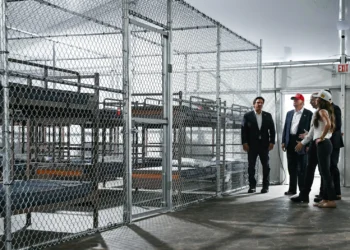
































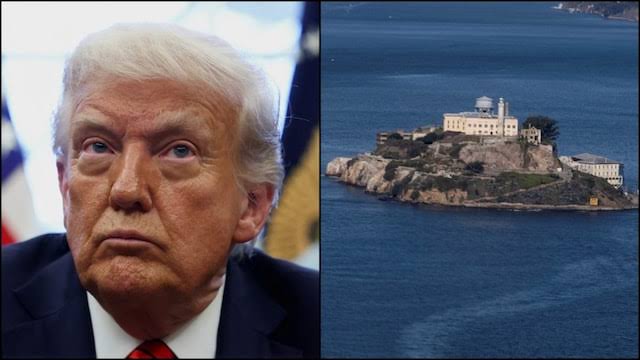
President Donald Trump has announced his intention to direct the Bureau of Prisons to reopen a substantially enlarged and rebuilt Alcatraz facility. This move aims to house “ruthless and violent offenders” in the notorious former federal prison, now a national park.


Trump’s announcement has sparked a mix of reactions, with many questioning the feasibility and practicality of such a plan. The proposal involves not just reopening the old prison but significantly expanding and rebuilding it to accommodate a new class of inmates.
This bold move is part of Trump’s broader efforts to address crime and enhance public safety, as he emphasized the need to deal firmly with “ruthless and violent offenders.”
Key Takeaways
- Trump plans to direct the Bureau of Prisons to reopen Alcatraz.
- The facility will be substantially enlarged and rebuilt.
- The aim is to house “ruthless and violent offenders.”
- The plan has sparked debate over its feasibility.
- It is part of Trump’s efforts to address crime and public safety.
Trump’s Announcement to Reopen Alcatraz: Key Details
Trump’s recent statement on Truth Social sparked controversy over Alcatraz’s potential reopening. He wrote, “I am directing the Bureau of Prisons, together with the Department of Justice, FBI, and Homeland Security, to reopen a substantially enlarged and rebuilt ALCATRAZ, to house America’s most ruthless and violent Offenders.”
The Official Statement from Trump
Trump’s announcement on Truth Social was direct and to the point, emphasizing his commitment to housing the most dangerous criminals in a secure facility. The statement has been met with a mixed reaction, with some supporting the move as a measure to combat violent crime, while others raise concerns about its feasibility and implications.
The proposal to reopen Alcatraz is part of a broader discussion on criminal justice reform and how to effectively manage violent offenders. Trump’s directive aims to address these issues by utilizing a facility known for its historical significance and former role in housing notorious inmates.
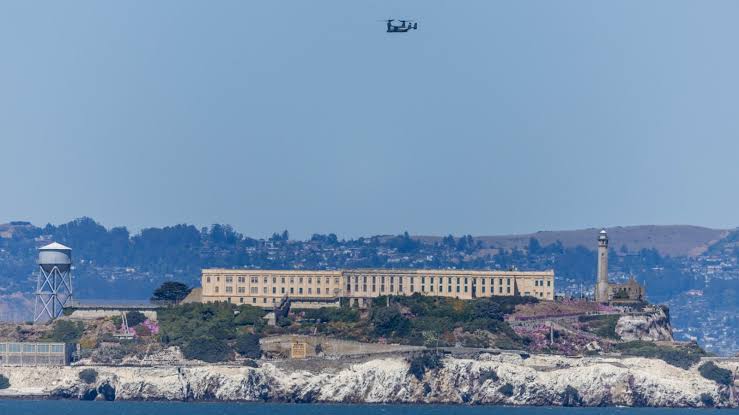
Directive to the Bureau of Prisons
The directive to the Bureau of Prisons and other federal agencies outlines a comprehensive plan to not only reopen Alcatraz but to substantially enlarge and rebuild it. This involves collaboration with various government departments to assess the infrastructure needs, security requirements, and operational logistics of such a facility.
The plan’s success hinges on the effective implementation of Trump’s directive, requiring a detailed analysis of the costs, legal implications, and environmental impact. As the proposal moves forward, it is likely to face scrutiny from various stakeholders, including lawmakers, environmental groups, and the public.
The History of Alcatraz Prison: From Military Fort to Federal Penitentiary
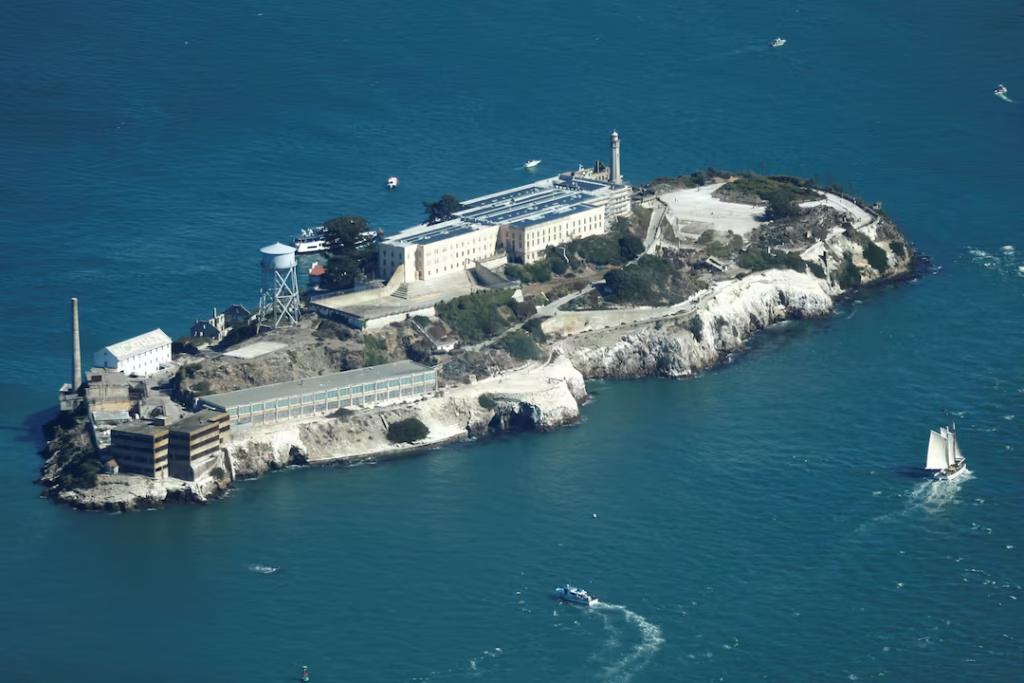
Alcatraz, an island steeped in history, transitioned from a military stronghold to a feared federal penitentiary, encapsulating the nation’s approach to justice and punishment over the decades. The history of Alcatraz Prison is a complex narrative that spans over a century, marked by significant transformations.
Alcatraz’s Origin as a Military Installation
Initially, Alcatraz Island served as a military fortress, constructed in the mid-19th century. Its strategic location in the San Francisco Bay made it an ideal spot for a military installation, designed to protect the bay from potential naval attacks. The fortification was part of a broader defensive system, highlighting the military significance of the island during that era.
The island’s early history as a military outpost laid the groundwork for its later use as a prison. The conversion from a military fort to a prison was a gradual process, influenced by the changing needs of the U.S. penal system.
Transformation into America’s Most Notorious Prison
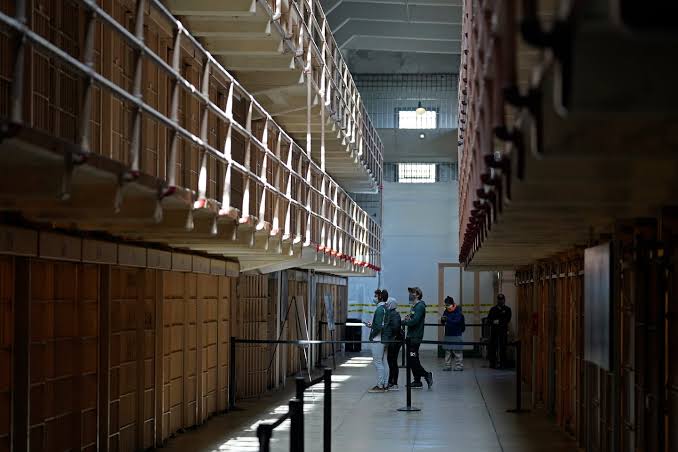
In 1934, Alcatraz was transformed into a federal penitentiary, designed to house the most dangerous and notorious criminals. The prison’s maximum-security facilities and isolated location made it an ideal place for incarcerating inmates who were considered a threat to public safety or had escaped from other prisons. Al Capone, one of America’s most infamous gangsters, was among the high-profile inmates held at Alcatraz.
The prison’s reputation as an escape-proof facility was bolstered by its harsh conditions and strict regimen. Despite its notorious reputation, there were several escape attempts, with the most famous being the disappearance of Frank Morris and the Anglin brothers in 1962.
Closure in 1963 and Conversion to National Park
After operating for nearly three decades, Alcatraz Federal Penitentiary was closed in 1963 due to high operating costs and deteriorating facilities. The prison’s closure marked the beginning of a new chapter for Alcatraz Island. In 1986, it was designated as a National Historic Landmark, and it is now part of the Golden Gate National Recreation Area, managed by the National Park Service.
“Alcatraz Island is a reminder of the complex and often harsh history of incarceration in the United States.”
Today, the island is a popular tourist destination, attracting visitors from around the world who are drawn to its rich history and the infamous legacy of its former federal prison.
Famous Inmates of Alcatraz and Their Legacy
Alcatraz Prison, once the maximum-security home for some of America’s most notorious criminals, held a unique place in the country’s penal history. The prison operated from 1934 to 1963, housing a total of 1,576 inmates during its operational years.
Al Capone and High-Profile Gangsters
Among the most infamous inmates was Al Capone, the notorious gangster who ruled Chicago’s underworld during the Prohibition era. Capone’s imprisonment in Alcatraz was a significant event, symbolizing the government’s crackdown on organized crime. Other high-profile gangsters, such as George “Machine Gun” Kelly and Alvin “Creepy Karpis” Karpavicz, also served time in the prison.
| Inmate Name | Notoriety | Years Served |
|---|---|---|
| Al Capone | Gangster, Chicago Outfit | 1934-1939 |
| George “Machine Gun” Kelly | Kidnapper, Bank Robber | 1934-1954 |
| Robert Stroud | Murderer, Ornithologist | 1916-1959 (including time pre-Alcatraz) |
Robert Stroud: The “Birdman of Alcatraz”
Robert Stroud, known as the “Birdman of Alcatraz,” was another famous inmate. Initially convicted of murder, Stroud spent many years in solitary confinement, where he became an ornithologist, writing a significant work on bird diseases. His story was later immortalized in a book and film, further cementing Alcatraz’s place in popular culture.
Escape Attempts and Their Outcomes
Several escape attempts were made from Alcatraz, with the most famous being the 1962 escape by Frank Morris and the Anglin brothers. Despite an extensive investigation, their fate remains unknown, fueling speculation about their possible survival. In total, 14 escape attempts involving 36 inmates were recorded, but none were officially confirmed as successful.
The legacy of Alcatraz and its inmates continues to captivate the public imagination, with the prison’s history serving as a reminder of the harsh realities of crime and punishment in America.
Alcatraz Prison Trump Alcatraz Chronicle: The Reopening Proposal
Trump’s plan to reopen Alcatraz Prison aims to address the issue of violent offenders in the US. The proposal, part of a broader effort to tackle crime, has generated significant interest and debate.

Defining the Target Inmate Population
The Trump administration’s proposal specifically targets “ruthless and violent offenders” for housing in the reopened Alcatraz Prison. This includes individuals convicted of serious crimes such as murder, assault, and gang-related violence. By focusing on this population, the administration aims to enhance public safety and provide a maximum-security facility for those who pose a significant threat to society.
According to the proposal, the selection process for inmates to be transferred to Alcatraz will be rigorous, involving thorough assessments of their criminal history and behavior. This process is designed to ensure that only the most dangerous offenders are housed in the facility.
Proposed Security Measures and Staffing
To address concerns about the safety and security of the reopened prison, the proposal outlines several key measures. These include the implementation of state-of-the-art surveillance technology, enhanced perimeter security, and a significant increase in the number of correctional officers. The facility is expected to operate with a high staff-to-inmate ratio to maintain order and prevent escape attempts.
As stated by a former corrections official,
“Reopening Alcatraz with modern security measures could provide a highly secure environment for housing violent offenders.”
The proposal also emphasizes the need for ongoing training for staff to handle the unique challenges posed by the target inmate population.
The plan to reopen Alcatraz Prison is part of a larger strategy to address issues within the US criminal justice system. As the proposal moves forward, it is likely to face scrutiny from various stakeholders, including lawmakers, civil rights groups, and local communities.
Legal Challenges to Reopening Alcatraz Prison
Reopening Alcatraz, as suggested by Trump, is not just a matter of policy but also of navigating a complex legal landscape. The proposal to revive the former federal prison on Alcatraz Island is embroiled in potential legal challenges that could significantly impact its feasibility.
Federal vs. State Jurisdiction Issues
The question of jurisdiction is a critical legal hurdle. As a federal facility in California, reopening Alcatraz Prison involves navigating the intricate relationship between federal and state laws. Federal jurisdiction typically supersedes state laws on federal lands, but this does not exempt the project from complying with certain state regulations, particularly those concerning environmental protection and public safety.
The Alcatraz federal prison history is well-documented, but its revival under Trump’s tough-on-crime policy must consider current legal frameworks. This includes assessing how federal authorities can operate within California’s legal boundaries, potentially requiring cooperation or agreements between federal and state entities.
California’s Environmental Protection Laws
California is known for its stringent environmental regulations, which could significantly impact the reopening of Alcatraz. If Trump really wants to reopen Alcatraz, he’ll have to navigate these laws carefully. The island is part of the Golden Gate National Recreation Area, and any plans to reactivate the prison must comply with environmental laws protecting the area’s wildlife and ecosystem.
Reopening Alcatraz may face legal challenges, including compliance with the National Environmental Policy Act (NEPA) and other environmental statutes. This could involve conducting thorough environmental impact assessments, a process that could delay or even derail the project.
The alcatraz reopening controversy thus extends beyond political or social debates into the legal arena, where the interplay between federal authority and state environmental laws will be crucial.
Environmental Impact Concerns for Alcatraz Island
Alcatraz Island, known for its historical significance and protected wildlife, faces potential environmental degradation if the prison is reopened. The island, now a national park, is home to various species that are protected by conservation laws.
Protected Wildlife and Habitat Considerations
The island is a habitat for several protected species, including the Western gull and the black-crowned night heron. Reopening the prison could disrupt these habitats and potentially harm the local wildlife. The U.S. Fish and Wildlife Service has expressed concerns about the potential impact on these protected species.
A detailed assessment of the potential environmental impacts is crucial. This includes studying the effects on the island’s ecosystem, such as the potential disruption to breeding grounds and the introduction of invasive species.
Water and Waste Management Challenges
Managing water and waste on the island poses significant challenges. The island’s infrastructure would need to be updated to accommodate the increased demand for water and to manage waste effectively. This includes ensuring that waste does not contaminate the surrounding waters.
| Challenge | Potential Impact | Mitigation Strategy |
|---|---|---|
| Water Supply | Increased demand could strain existing resources. | Implement water conservation measures and consider alternative sources. |
| Waste Management | Inadequate waste management could lead to environmental pollution. | Upgrade waste management infrastructure to handle increased capacity. |
| Habitat Disruption | Construction and increased human activity could disrupt wildlife habitats. | Conduct thorough environmental impact assessments and implement measures to minimize habitat disruption. |
The table highlights some of the key environmental challenges associated with reopening Alcatraz Prison, along with potential mitigation strategies. Addressing these concerns is crucial to minimizing the environmental footprint of such a project.
California’s Response to Trump’s Alcatraz Reopening Plan
California’s response to Trump’s Alcatraz reopening plan has been met with skepticism, as state officials question the feasibility of the initiative. The proposal has sparked a heated debate, with various stakeholders weighing in on the potential implications.
State Officials’ Statements and Legal Position
California Governor Gavin Newsom’s office described Trump’s announcement as a “distraction day,” indicating a dismissive stance towards the proposal. State officials are concerned about the legal and logistical challenges associated with reopening Alcatraz. According to the California Department of Corrections and Rehabilitation, the plan raises several jurisdictional and environmental issues.
The legal position of the state is likely to be influenced by existing laws and regulations regarding the use of Alcatraz Island. As a national park, any significant changes to its use would require careful consideration and potentially lengthy legal battles.
| Issue | California’s Position | Federal Position |
|---|---|---|
| Jurisdiction | State opposes federal control | Federal government asserts authority |
| Environmental Impact | Concerns about wildlife and habitat | Potential for environmental assessments |
| Funding | Questions about cost allocation | Federal budget allocation proposed |
San Francisco’s Stance on the Proposal
San Francisco officials have also expressed skepticism about the Trump administration’s plan. The city’s mayor has questioned the feasibility of reopening Alcatraz, citing concerns about the island’s infrastructure and the potential impact on local tourism. San Francisco’s stance is likely to be influenced by the city’s historical and cultural ties to Alcatraz, as well as its commitment to preserving the island’s current status as a national park and tourist attraction.
The city’s opposition is expected to be a significant hurdle for the Trump administration’s proposal, as San Francisco has a strong voice in California politics and is likely to mobilize against the plan.
Political Motivations Behind the Alcatraz Reopening Announcement
Trump’s plan to reopen Alcatraz is seen by many as a strategic maneuver within his broader tough-on-crime policy. This move is part of a larger narrative that has been a cornerstone of his political campaign.
Campaign Strategy Analysis
The announcement to reopen Alcatraz can be viewed as a bold campaign strategy, aimed at reinforcing Trump’s image as a champion of law and order. By proposing the reopening of a historically notorious prison, Trump taps into public sentiment regarding crime and punishment.
This strategy is likely intended to galvanize support from voters who prioritize crime control and public safety. The use of Alcatraz, a prison with a storied past, serves as a potent symbol in this context.
Alignment with “Law and Order” Messaging
The decision to reopen Alcatraz aligns closely with Trump’s “law and order” messaging, a key component of his political platform. This narrative emphasizes the need for stringent measures to combat crime and ensure public safety.
To illustrate the alignment of Trump’s Alcatraz proposal with his broader policies, consider the following table:
| Policy Aspect | Alcatraz Reopening Proposal | Law and Order Messaging |
|---|---|---|
| Tough-on-Crime Approach | Reopening Alcatraz for “ruthless and violent offenders” | Emphasis on stricter crime policies |
| Public Perception | Symbolic use of Alcatraz to evoke strong public reaction | Positioning Trump as a champion of public safety |
| Campaign Strategy | Using Alcatraz to galvanize voter support | Reinforcing Trump’s law and order image |
The table highlights how the Alcatraz reopening proposal fits into Trump’s broader tough-on-crime and “law and order” campaign narrative, demonstrating a clear strategic alignment.
Public and Expert Reactions to Trump Reopen Alcatraz Initiative
Trump’s initiative to reopen the notorious Alcatraz Prison has drawn both support and criticism from different quarters. The proposal has ignited a multifaceted debate, reflecting a broad spectrum of opinions on criminal justice reform and the management of violent offenders.
Support from Law Enforcement Organizations
Some law enforcement organizations have expressed support for Trump’s plan, citing the need for stricter measures to handle ruthless and violent offenders. For instance, the National Fraternal Order of Police has voiced its approval, arguing that Alcatraz could serve as a maximum-security facility for the most dangerous criminals. This support is rooted in the belief that current prison systems are inadequate for housing inmates who pose a significant threat to public safety.
- Law enforcement groups see Alcatraz as a viable option for isolating high-risk inmates.
- The proposal is viewed as a step towards enhancing public safety.
Opposition from Civil Rights Groups
Conversely, civil rights groups have been vocal in their opposition to the plan. Organizations such as the ACLU have raised concerns about the potential for human rights abuses and the inhumane conditions that could prevail in a reactivated Alcatraz. They argue that the focus should be on rehabilitation rather than isolation and that modern prisons are better equipped to handle inmates humanely.
“Reopening Alcatraz would be a step backward for human rights and criminal justice reform.”
Criminal Justice Experts’ Perspectives
Criminal justice experts have offered varied perspectives on the feasibility and implications of reopening Alcatraz. Some argue that while the idea may have symbolic value, it is impractical due to the high costs associated with renovating the facility and maintaining its operations. Others suggest that the money could be better spent on modernizing existing prisons or implementing alternative justice programs.
Feasibility Assessment: Can Alcatraz Actually Reopen?
Assessing the feasibility of reopening Alcatraz involves examining several critical factors that determine its viability as a modern prison facility.
Infrastructure Challenges and Modernization Requirements
Reopening Alcatraz would necessitate significant investments in infrastructure to meet contemporary correctional standards. The prison’s outdated facilities, including its electrical and plumbing systems, would require substantial modernization. Moreover, the island’s remote location poses logistical challenges for transporting materials and personnel.
A detailed analysis of the infrastructure challenges reveals the need for:
- Upgrading security systems to prevent escapes and ensure inmate safety
- Renovating living quarters to provide humane conditions
- Improving transportation links to facilitate the movement of staff and supplies
Timeline and Implementation Hurdles
The timeline for reopening Alcatraz is another critical aspect of the feasibility assessment. Several factors could potentially delay the project, including environmental concerns, legal challenges, and funding issues. A realistic implementation plan must consider these hurdles and develop strategies to overcome them.
| Implementation Phase | Key Activities | Potential Challenges |
|---|---|---|
| Phase 1: Planning and Design | Conduct feasibility studies, design renovations | Environmental impact assessments, legal challenges |
| Phase 2: Infrastructure Development | Upgrade facilities, improve security | Funding constraints, logistical issues |
| Phase 3: Operational Setup | Staff training, establish operational protocols | Staffing challenges, regulatory compliance |
Estimated Costs and Funding for Reopening Alcatraz
The financial implications of Trump’s plan to reopen Alcatraz are significant, involving substantial infrastructure renovation and operational expenses. Reopening the prison would require a comprehensive financial strategy to cover both initial renovation costs and ongoing expenditures.
Infrastructure Renovation Budget
The infrastructure renovation budget for Alcatraz would be substantial, given the prison’s age and current state of disrepair. Estimates suggest that renovating the facility could cost upwards of $200 million, considering the need to upgrade outdated infrastructure, improve security measures, and comply with modern correctional facility standards.
A significant portion of the renovation budget would be allocated to:
- Restoring and modernizing cellblocks
- Upgrading security systems and surveillance technology
- Improving living conditions for inmates and staff
Ongoing Operational Expenses
In addition to the initial renovation costs, reopening Alcatraz would entail significant ongoing operational expenses. These include staffing, utilities, food, and healthcare for inmates, as well as maintenance and repairs to the facility.
According to experts, the annual operational cost per inmate in a maximum-security prison can range from $60,000 to over $100,000. With a capacity to house around 300 inmates, Alcatraz’s annual operational expenses could total between $18 million and $30 million.
“The cost of incarcerating inmates in a facility like Alcatraz is not just about the initial investment; it’s about the long-term financial commitment to maintaining a secure and humane environment.”
Funding for these expenses could potentially come from a combination of federal appropriations, government budget reallocations, or public-private partnerships. However, securing the necessary funding would likely face challenges and require careful planning and negotiation.
Alternative Solutions to Prison Overcrowding and Violent Offender Management
While the idea of reopening Alcatraz Prison has garnered significant attention, it’s vital to examine other approaches to addressing the issues of prison overcrowding and violent offender management. Instead of reviving a historic prison, exploring alternative solutions could provide more effective and sustainable answers to these complex problems.
Modern Prison Facilities vs. Historic Renovation
One alternative to reopening Alcatraz is investing in modern prison facilities that incorporate advanced security measures and rehabilitation programs. Modern prisons can be designed with efficiency and safety in mind, potentially offering better outcomes for both inmates and staff. A comparison between modern and historic facilities highlights the advantages of new constructions:
| Feature | Modern Prison Facilities | Historic Renovation (Alcatraz) |
|---|---|---|
| Security Measures | Advanced surveillance and access control | Limited by historic infrastructure |
| Rehabilitation Programs | Tailored programs for inmates | Challenging to implement due to space constraints |
| Operational Costs | Energy-efficient designs reduce costs | Higher maintenance costs for historic buildings |
Criminal Justice Reform Approaches
Another approach to managing violent offenders and reducing prison overcrowding involves criminal justice reform. This can include sentencing reform, alternative sentencing programs, and rehabilitation initiatives. By addressing the root causes of criminal behavior and providing support for reintegration into society, these reforms can help reduce recidivism rates and alleviate prison overcrowding.
Some key aspects of criminal justice reform include:
- Reducing mandatory minimum sentences
- Expanding diversion programs for non-violent offenders
- Improving access to education and job training within prisons
By exploring these alternative solutions, policymakers can develop more effective strategies for managing violent offenders and addressing prison overcrowding, potentially rendering the need to reopen Alcatraz unnecessary.
Conclusion: The Future of Alcatraz Under Trump’s Proposal
The proposal to reopen Alcatraz Prison is a complex issue, with various factors to consider, including legal, environmental, and financial implications. Trump’s plan to house “ruthless and violent offenders” in the historic prison has sparked debate among lawmakers, experts, and the public.
As discussed, the future of Alcatraz under Trump’s proposal hinges on several key considerations. Legal challenges, environmental concerns, and the significant costs associated with reopening the prison are just a few of the hurdles that need to be addressed.
The Trump Alcatraz initiative has also raised questions about the effectiveness of such a move in addressing prison overcrowding and managing violent offenders. Alternative solutions, such as modern prison facilities and criminal justice reform approaches, have been proposed as potential alternatives.
In conclusion, the future of Alcatraz remains uncertain, with various stakeholders weighing in on the proposal. As the discussion continues, it is clear that any decision regarding the reopening of Alcatraz will require careful consideration of the complex issues involved.
FAQ
What was Trump’s announcement regarding Alcatraz Prison?
Trump announced his intention to reopen Alcatraz Prison to house “ruthless and violent offenders” through a statement on Truth Social and a directive to various federal agencies.
Why is Trump considering reopening Alcatraz Prison?
Trump’s decision is part of his “law and order” campaign strategy, aiming to address prison overcrowding and manage violent offenders.
What are the potential legal hurdles to reopening Alcatraz?
The main legal challenges include federal vs. state jurisdiction issues and compliance with California’s environmental protection laws.
What environmental concerns are associated with reopening Alcatraz?
The concerns include the impact on protected wildlife, habitat considerations, and the challenges of managing water and waste on the island.
How did California state officials react to Trump’s proposal?
California state officials have expressed opposition to the proposal, citing various concerns including environmental and jurisdictional issues.
What is the estimated cost of reopening Alcatraz?
The estimated costs include a significant infrastructure renovation budget and ongoing operational expenses, which are substantial.
Are there alternative solutions to managing prison overcrowding and violent offenders?
Yes, alternatives include developing modern prison facilities and implementing criminal justice reform initiatives.
Will Alcatraz house new prisoners if it reopens?
According to Trump’s proposal, Alcatraz is intended to house “ruthless and violent offenders,” but the feasibility and specifics are still under consideration.
What are the infrastructure challenges in reopening Alcatraz?
The infrastructure challenges include modernization requirements, timeline, and implementation hurdles, which are significant due to the age and historical significance of the facility.
How does the public perceive Trump’s initiative to reopen Alcatraz?
Reactions are varied, with support from law enforcement, opposition from civil rights groups, and mixed perspectives from criminal justice experts.
What is the history of Alcatraz Prison?
Alcatraz has a rich history, from its origins as a military installation to its transformation into a federal penitentiary and eventual closure in 1963.
Who were some of the most famous inmates of Alcatraz?
Notable inmates include Al Capone and Robert Stroud, known as the “Birdman of Alcatraz,” among others.